

thrid enables makers and businesses to bring their innovations to market – and end customers to buy well-thought-out products based on real needs.
Our Mission
Turning good ideas into marketable products.
Great product ideas don't fail due to a lack of creativity – but due to a lack of infrastructure.
Production, warehousing, quality control, shipping, platform integration – all of this costs time, capital, and experience.
This is precisely where thrid comes in.
We build the bridge between idea and market.
Our goal is to radically lower the barrier to entry for physical products – so that anyone with a strong solution can turn it into a real business.
20,000+
satisfied customers
20+
Active 3D printers in daily operation
2021
Founded
What makes thrid special

Radical digitalization
Our processes are fully digitized – from iPads in the print farm to digital multi-level production bills of material, and MDE devices in the warehouse.
This reduces error rates and creates maximum transparency.

Automated Production
With over 20 printers, we produce efficiently and scalably. Fully automated printing processes enable competitive prices – without compromising quality.

Young, flexible, growth-oriented
Since 2021, we have been continuously expanding our infrastructure.
We are not stuck in our ways – we constantly test, optimize, and evolve.

Sustainable Manufacturing
We produce in Germany and predominantly on-demand.
No unnecessary overproduction, no long supply chains – just efficient, needs-based manufacturing.
Products from people who know the problem firsthand.
Our products are not created in anonymous large corporations.
They are developed by makers/companies who are themselves part of the respective niche – people who have identified a real problem and developed a functional solution for it.
We ensure that these solutions are professionally manufactured, tested, and reliably delivered.
This way, our customers receive well-thought-out products with real added value – instead of mass-produced goods without practical relevance.
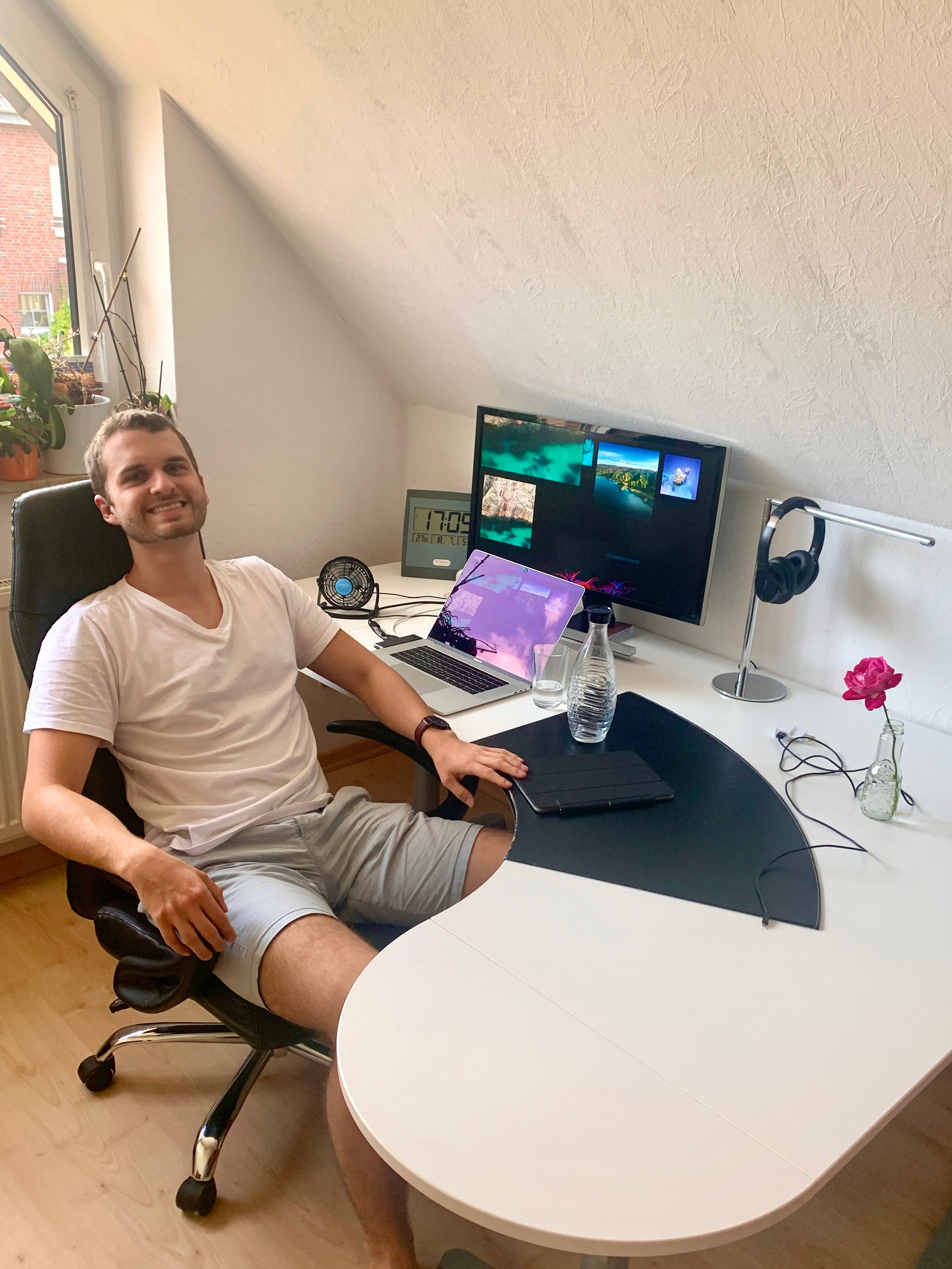
I had no idea what to expect
The problem that started it all
It all started in my childhood bedroom. While I was writing my master's thesis, one of my MacBook's keys stopped working properly. So I searched the internet for a replacement – and realized how complicated and poor the offerings were. It quickly became clear: this could be done better. I bought spare parts, created optimized listings, and quickly became the #1 seller on eBay for replacement keys. Nothing big, nothing glamorous – but in this small niche, I dominated. That's how MY-LAPTOP-SETUP was born.
However, with growth came problems that are not visible from the outside. Choosing the right supplier in China proved crucial – something I didn't know at the time. The difference between what was discussed and what was ultimately delivered often felt like two different worlds. Weeks or months later, you'd open a box and be negatively surprised. Adjustments to products or packaging were only possible with each new delivery. This meant long cycles, tied-up capital, and little flexibility.
The more products we wanted to offer, the more capital had to be pre-financed. The better purchasing conditions we wanted, the larger the order quantities had to be. For a small company, this is a bottomless pit. This is exactly where the idea arose that we needed to produce ourselves to become flexible, independent, and faster. This idea later led us to 3D printing.
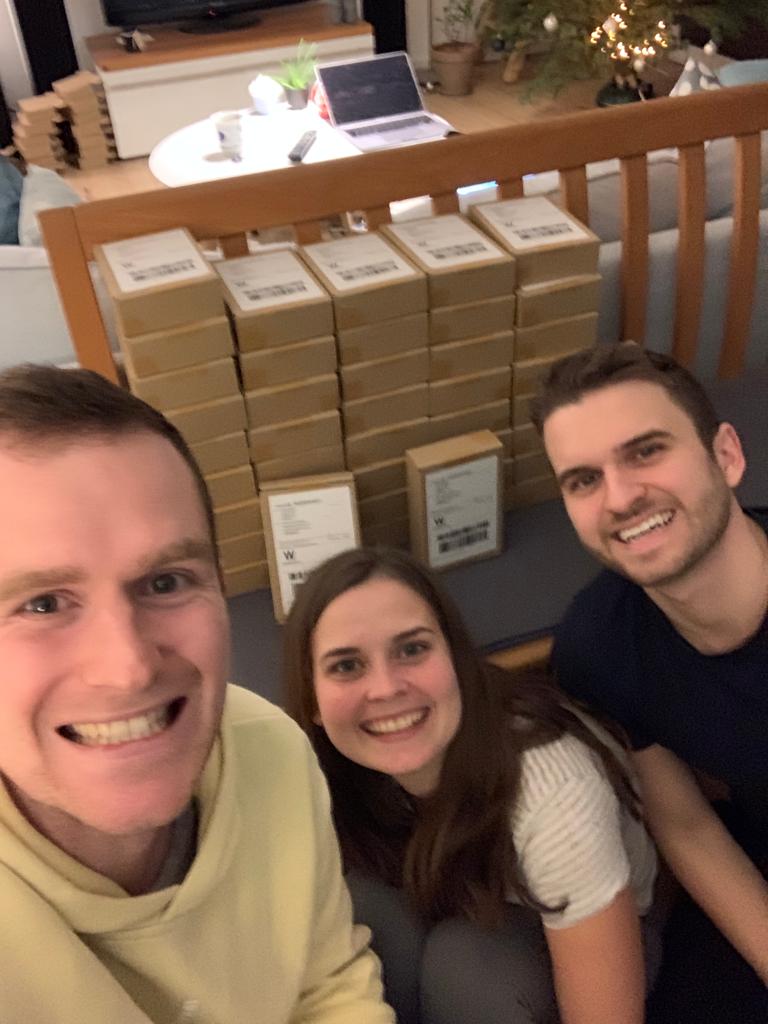
The attempt to control everything yourself
Our first 3D printed product
With the support of my sister and her boyfriend, I found and developed the first product that could be produced with a 3D printer. So we started – first with one, and shortly thereafter with three Ender 3 V2s. The idea was perfect: no minimum order quantities, full control, instant adjustments possible. The reality was harsh. High scrap rates, constant recalibrations, and quality that was anything but consistent. Production sounded easier than it actually was.
We also made many mistakes with packaging. Sustainable paper bags that neither looked high-quality nor were sturdy. Thermal labels that faded after just a few months. From the reviews, it quickly became clear that a product needs more than just the component itself. It needs a clean presentation, thoughtful packaging, and a coherent overall image. 2022 was chaotic, but it was the year we gained real production experience.
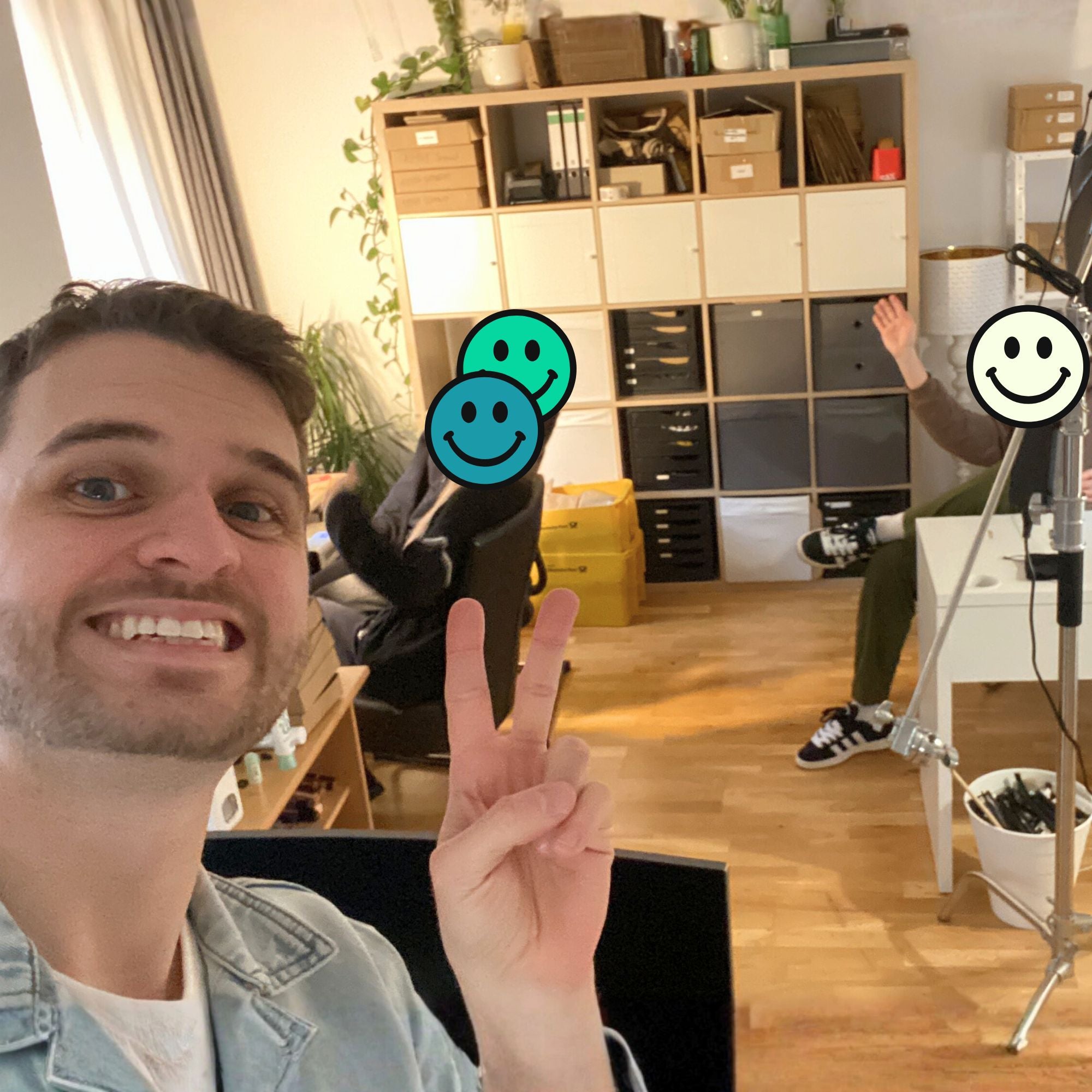
Growth brings new problems
From a one-man show to the first team
It was time for the next step: a 30sqm office. Actually, it was my new apartment, which immediately became a workplace again when I moved in with my girlfriend. The first mini-jobbers and student workers joined the team. And suddenly it became clear how much knowledge only existed in my head. When structure is missing, you yourself become the biggest bottleneck.
We started building processes, put barcodes on products, and bought our first scanner – which, of course, didn't fit our use case. Nevertheless, it was an important step. 2023 was the year we understood that scaling only works with systems, not with improvisation.
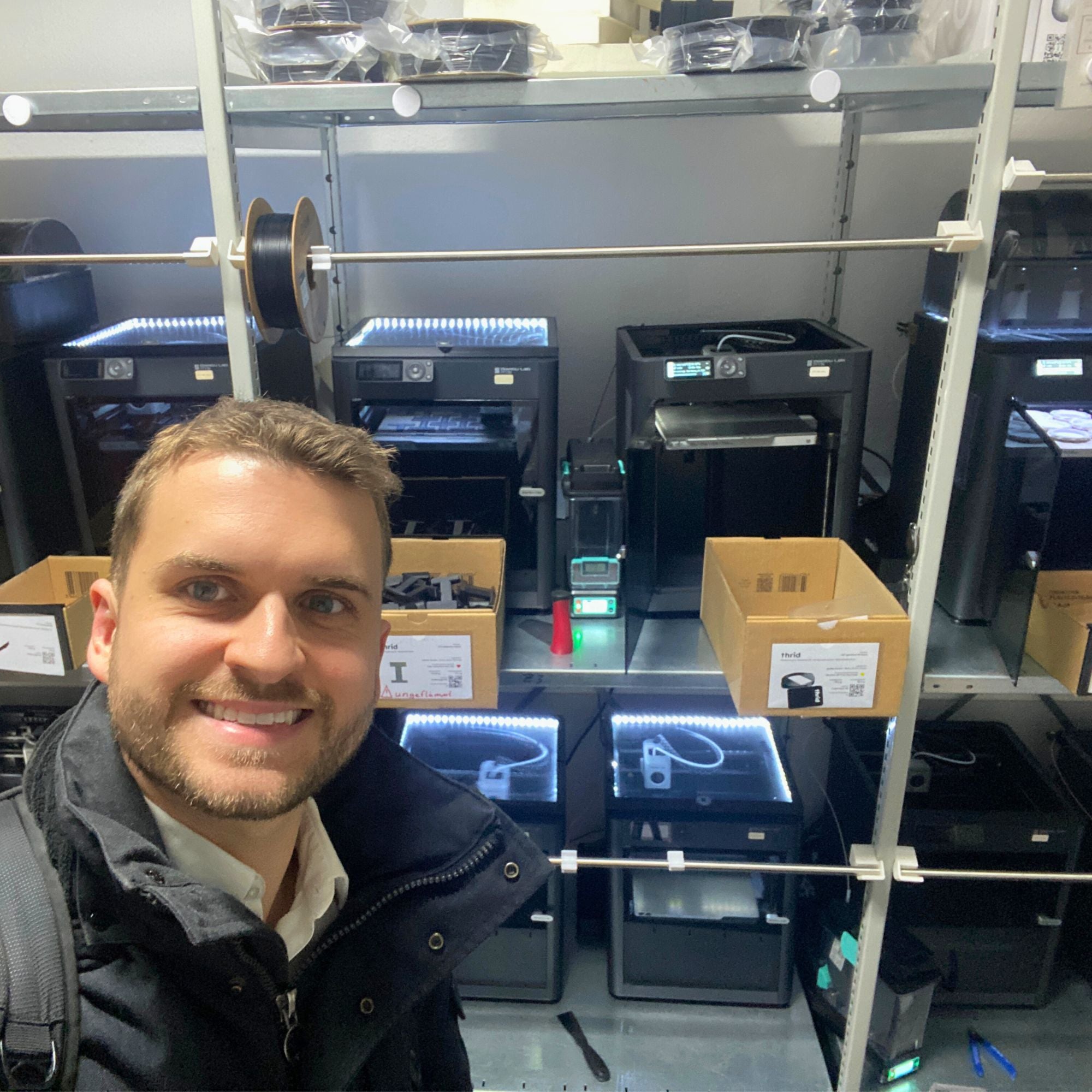
Taking calculated risks
Structure, print farm, and hard market lessons
We moved into a 70sqm office because the old one was bursting at the seams. Finally, there was space for a proper print farm. By the end of the year, 12 printers were running. All products were barcoded and scannable, processes became more structured, and shipping was organized more professionally. Shipments were picked up regularly instead of being taken to the post office ourselves.
At the same time, we developed many new products – and also had to accept setbacks. It became clear to me that market analysis is essential. Before investing energy into a product, these questions must be answered: Is there sufficient demand? Is the margin adequate? Can the product be scaled economically? 2024 was the year we started to think more strategically rather than just operationally.
Focus instead of doing everything yourself
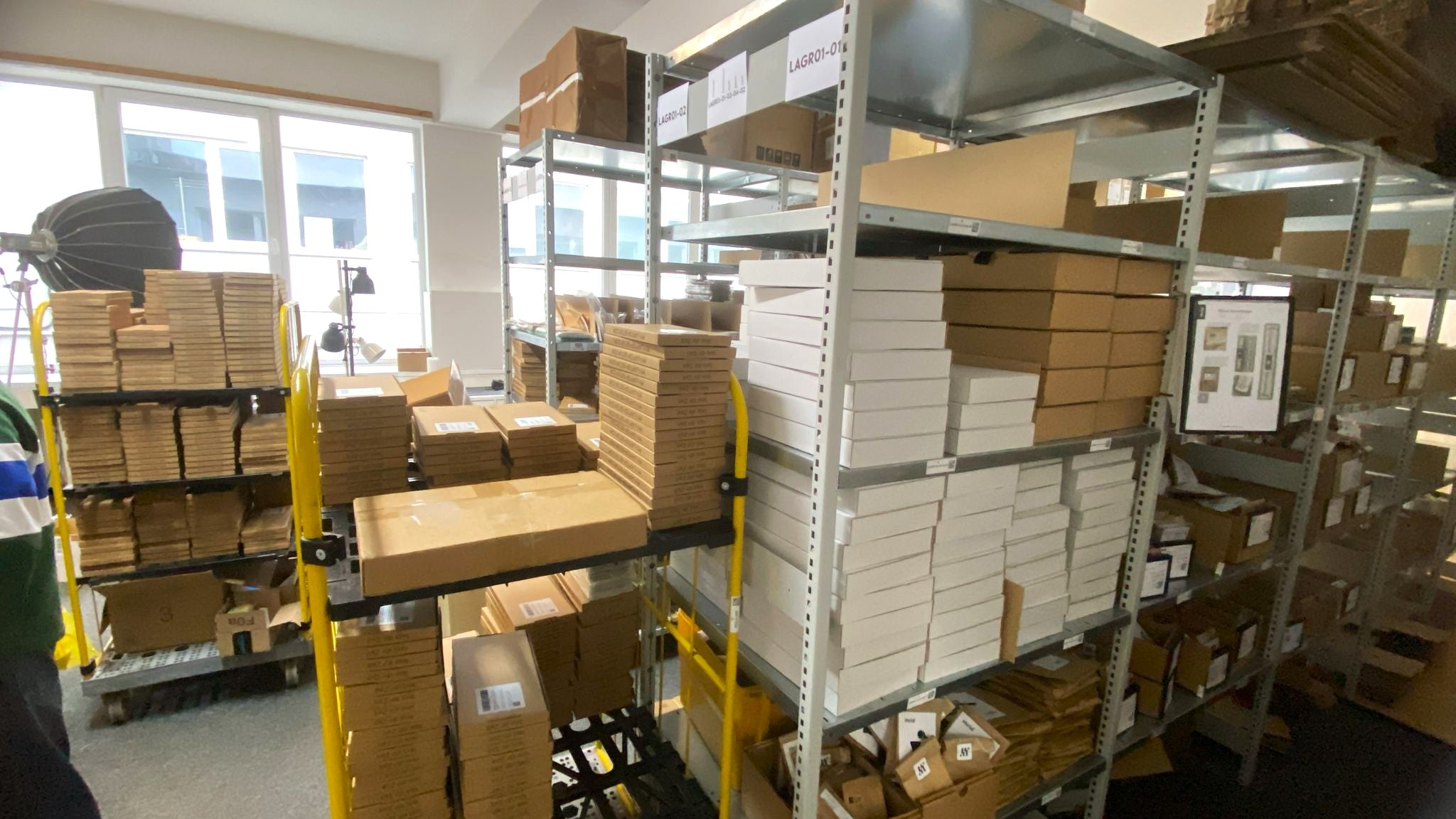
We continued to expand, increasing our area to ~150sqm and growing our print farm to 23 printers. However, with the growing infrastructure, costs and complexity also increased. Managing production, marketing, sales, support, shipping, and product development simultaneously is hardly realistic for a small company.
We realized that we needed to focus. We cannot be specialists in every niche. At the same time, many niches are too small to sustain an entire company on their own. So, we began making our established infrastructure available to other makers. Instead of controlling everything ourselves, we enable others to benefit from our setup. 2025 was the year of changing perspective:
Away from being purely a product provider, towards being a platform for production and scaling.